Made in France, Basque Country
Espadrilles braided and hand-sewn in Soule, in the Mauléon area, the birthplace of the espadrille.
Basque Country
Every step takes place in Soule, in the Mauléon area.
Hand-sewn
The upper is sewn onto the sole by hand, stitch by stitch.
Natural materials
Jute or linen rope, cotton canvas, rubber.
The 6 steps of making
From rope to pair, every espadrille passes through the hands of craftspeople in the Mauléon area.
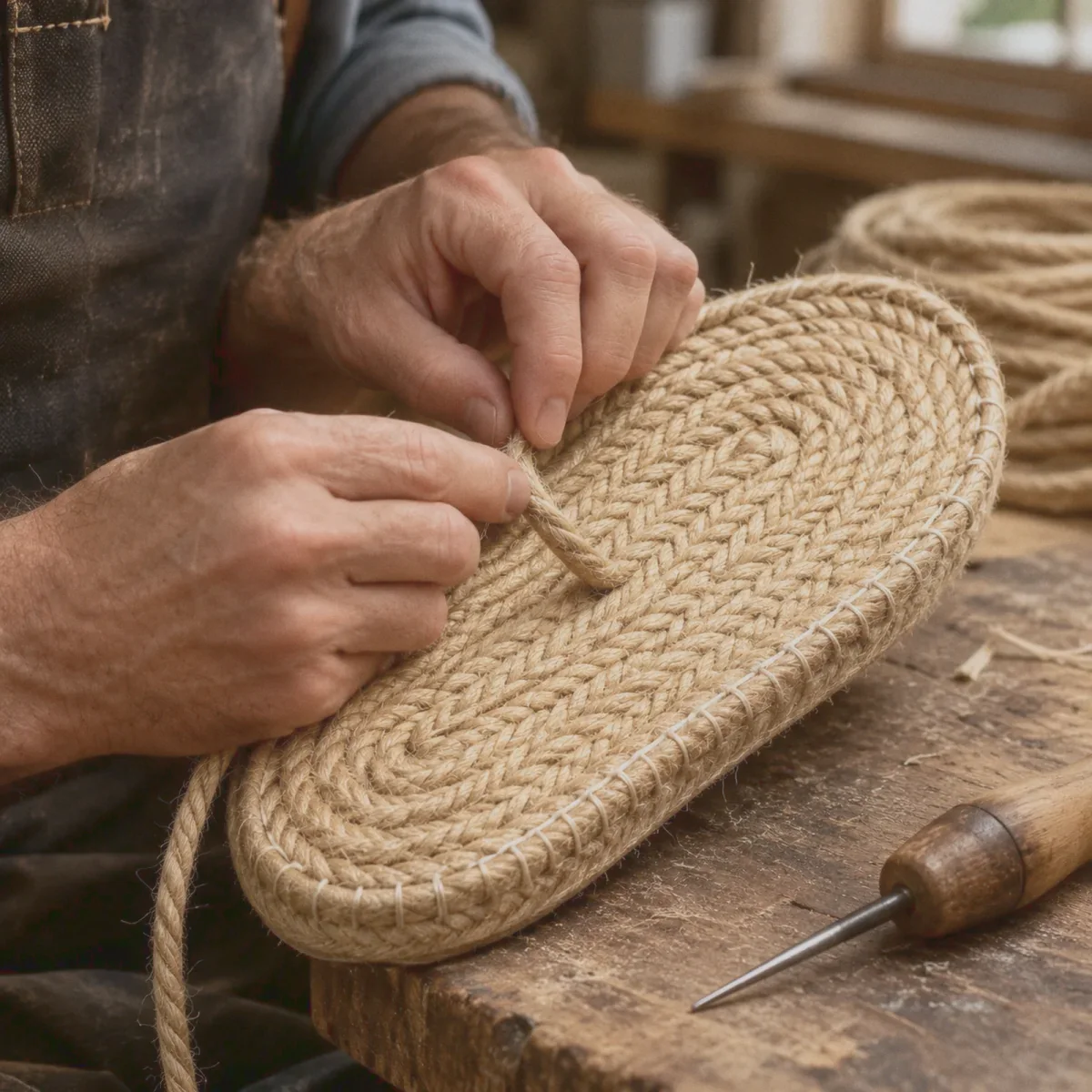
Braiding
Strands of jute, or linen, are braided into a long, even braid. This braid will become the sole: supple and strong.
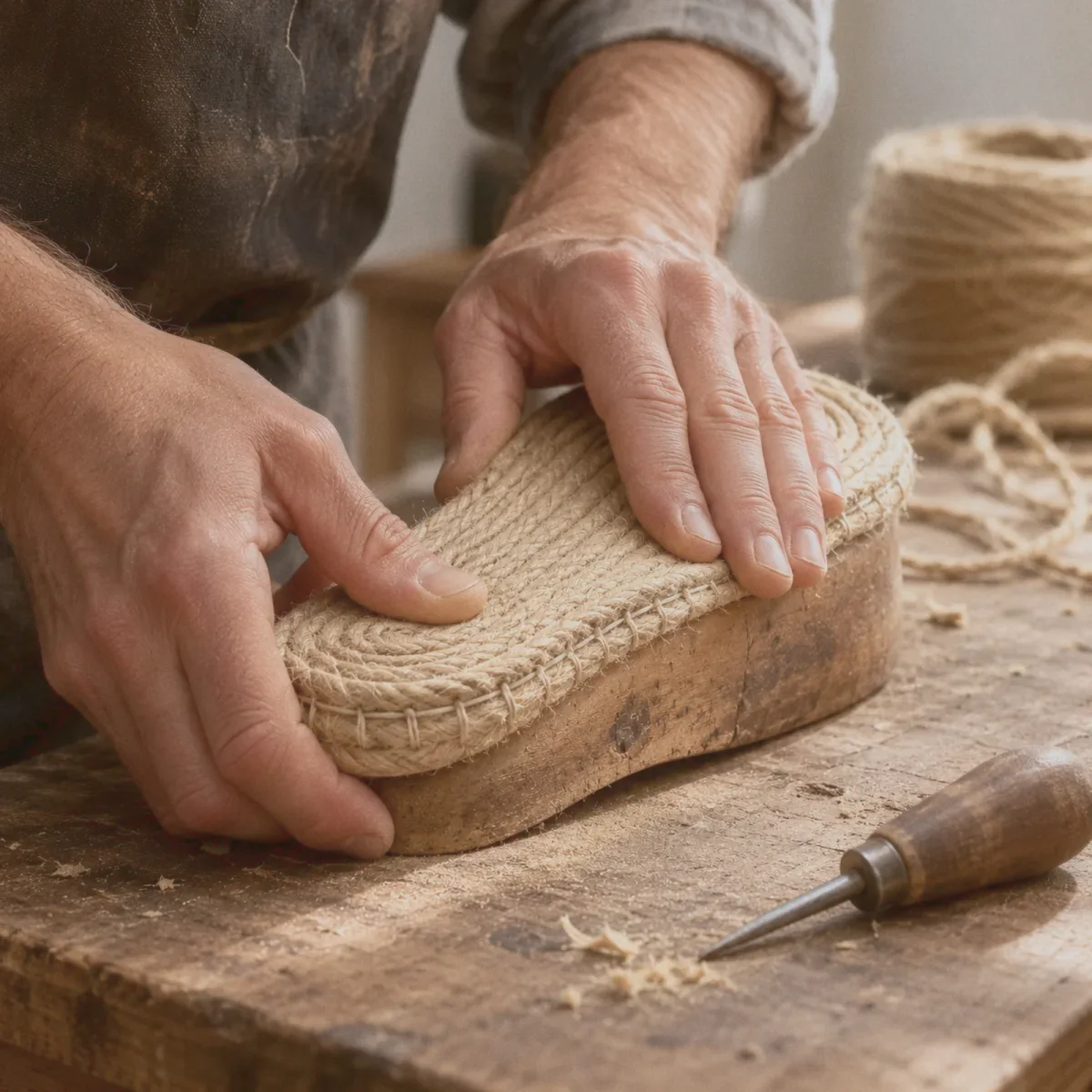
Moulding
The braid is coiled in a spiral on a turning wooden plate, around markers set for the shoe size. The sole is pressed, then stitched right through, point by point, on a hand-operated machine.
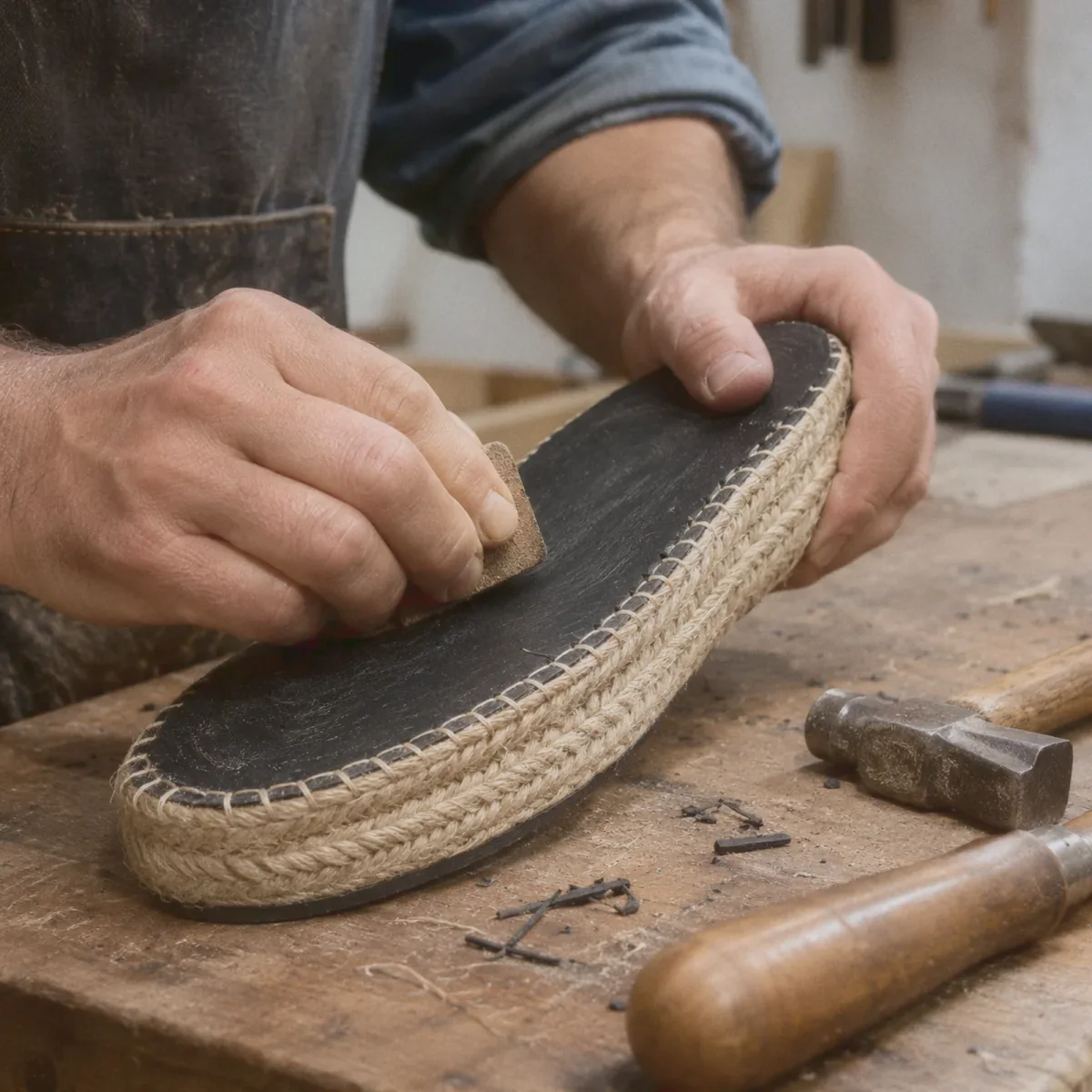
Vulcanisation
Rubber is heated and pressed together with the sole. This thin layer under the rope protects it from wear while keeping it supple.
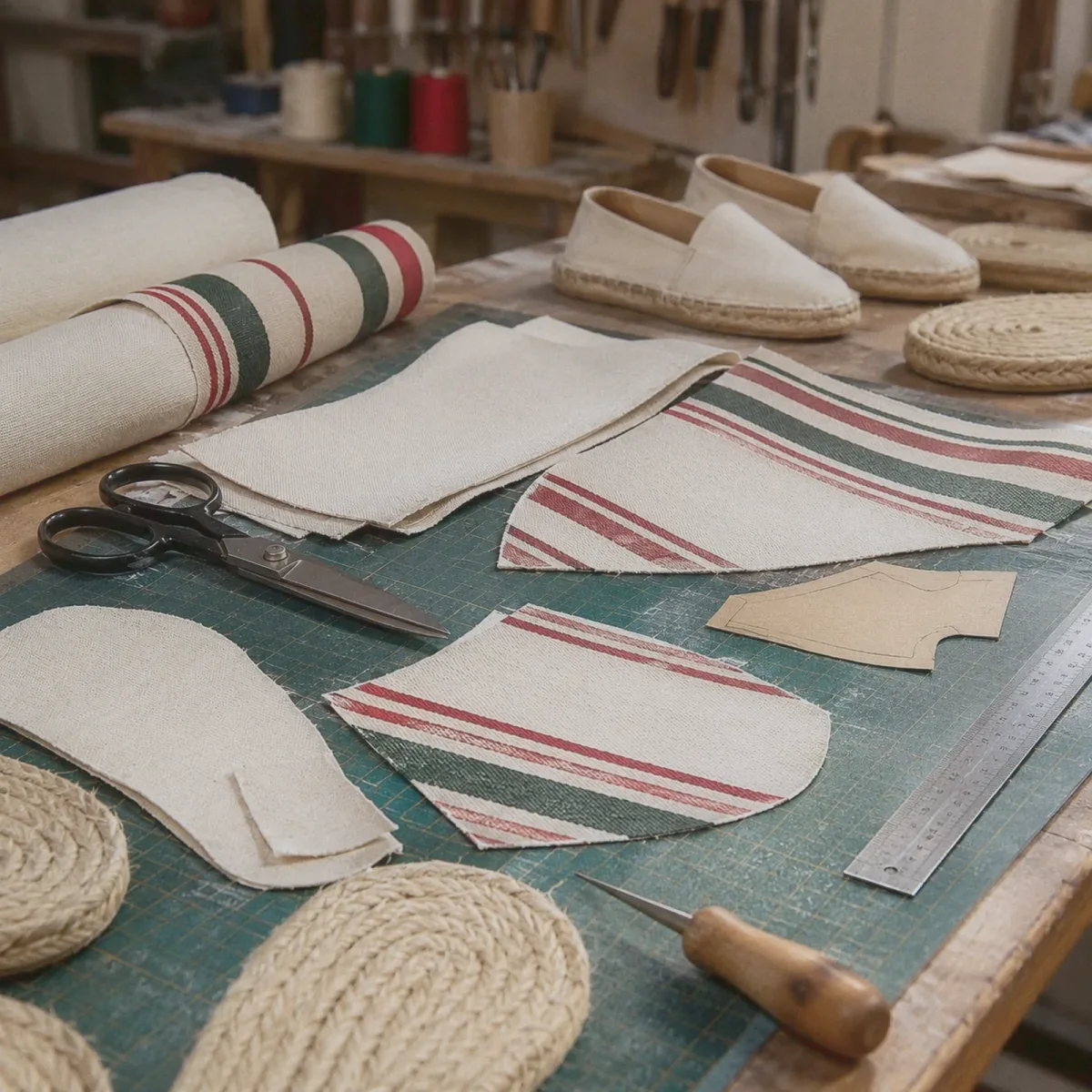
Cutting the canvas
The cotton canvas is die-cut into two parts: the front upper and the back upper.
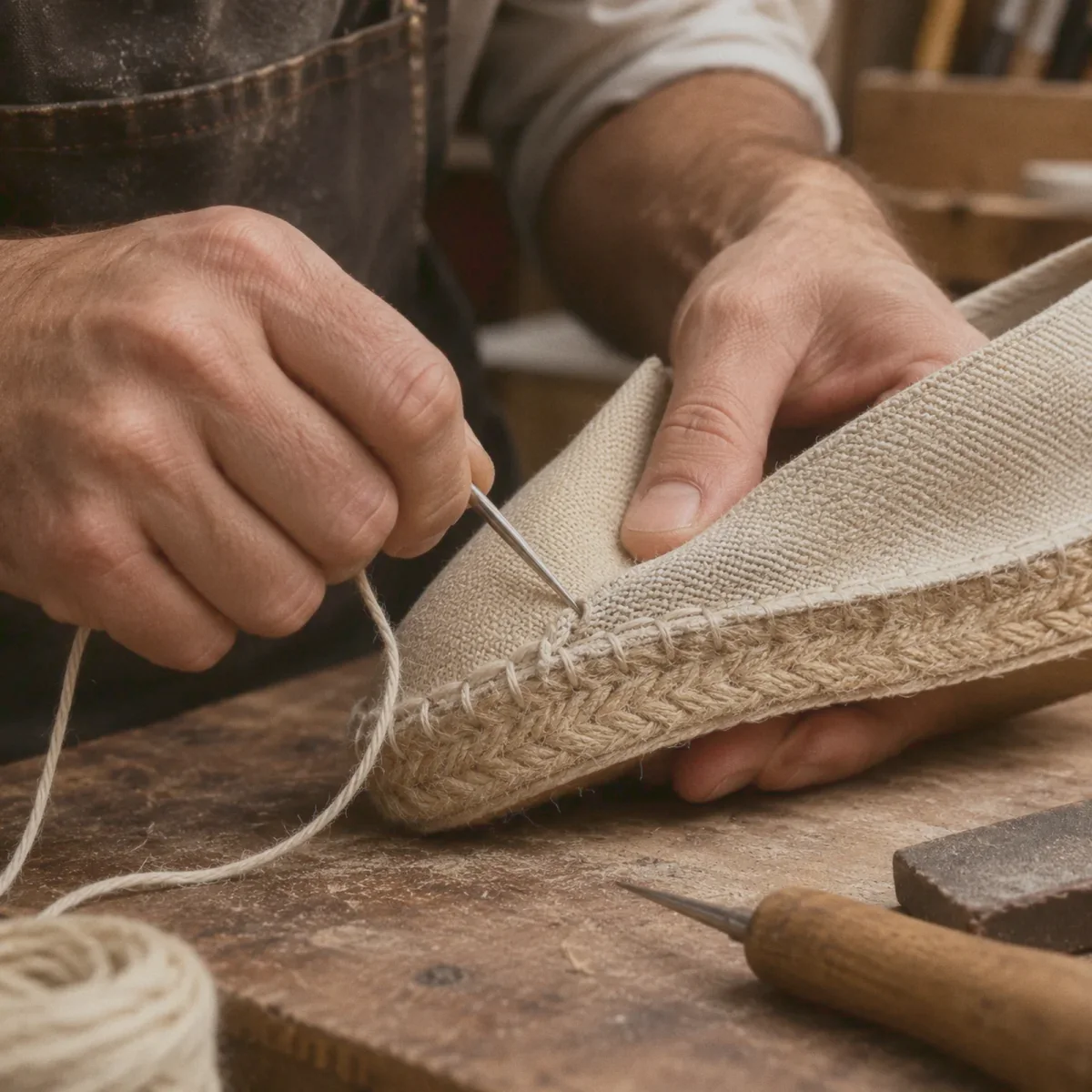
Hand-sewing
The front and back uppers are joined, then sewn onto the sole by hand, stitch by stitch. This seam is what gives a true espadrille its hold and its character.
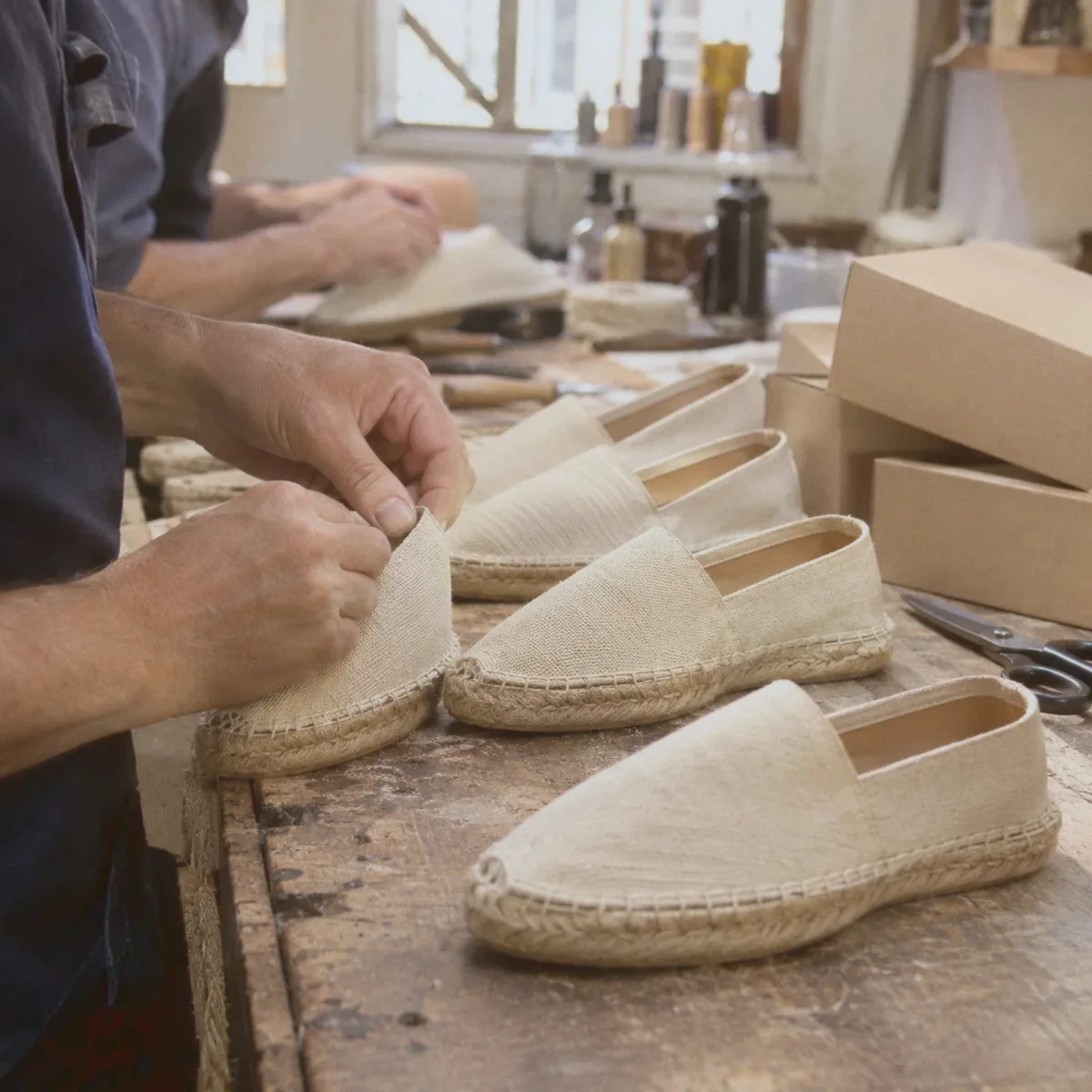
Finishing
The toe is hand-sewn, then every pair is checked, seam by seam, before it leaves.
Illustrative images of the making steps.
The heritage of Soule
At the foot of the Pyrenees, Soule has been making espadrilles for more than two centuries. In Mauléon and the neighbouring villages, generations of craftspeople braided rope and sewed canvas, until the small capital of Soule became the birthplace of the espadrille.
Espadrilles du Pays Basque carries these skills forward: our espadrilles are made by a workshop in the Mauléon area, with the materials and techniques of the past.
Here, the hand remains at the heart of the craft: the braid is coiled, the sole is stitched point by point, the canvas is sewn with a needle. That is what gives every pair its suppleness, its hold and its character.
Natural materials
Jute
The traditional espadrille rope, braided then stitched to form the sole.
Linen
A lighter natural rope, offered as an alternative to jute.
Cotton
A 100% cotton canvas for the upper, plain or printed.
Rubber
A thin vulcanised layer that protects the rope from wear.
Frequently asked questions
Are the espadrilles really hand-sewn?
Yes. The upper is sewn onto the sole by hand, and so is the toe. The sole itself is stitched point by point on a hand-operated machine.
Jute or linen: what's the difference?
Jute is the traditional espadrille rope, golden and sturdy. Linen gives a lighter sole. Either way, the rope stays natural and is never dyed.
Why choose an espadrille made in the Basque Country?
For craftsmanship handed down through generations, natural materials and local manufacturing that keeps the workshops of Soule alive.